

Marriage dissolution is one of life’s most challenging transitions, affecting finances, living arrangements, and family dynamics. When relationships reach a point at which a split becomes the best path forward, legal guidance helps protect spouses’ rights and interests throughout the process.
New Jersey divorce law involves multiple steps and decisions that have lasting consequences for everyone involved. Our Paramus divorce lawyers at Marotta Blazini Dunleavy LLC provide experienced representation during this difficult time. Our firm assists clients with all aspects of marital dissolution, from initial filings to final settlements and later challenges. We focus on achieving favorable outcomes while minimizing conflict and stress whenever possible.
New Jersey allows fault-based and no-fault divorce options. The most common ground is irreconcilable differences, which requires parties to be separated for at least six months with no reasonable prospect of reconciliation. Fault-based grounds include adultery, desertion, extreme cruelty, addiction, institutionalization, imprisonment, and deviant sexual conduct. Although fault grounds may affect certain aspects of divorce, such as alimony, most cases proceed under no-fault provisions because they avoid lengthy disputes over marital misconduct.
The timeline for divorce varies based on whether parties agree on major issues or require court intervention. Uncontested divorces where spouses reach agreements on all matters can be finalized in several months. Contested divorces involving disputes over custody, property division, or support typically take a year or longer to complete. Court schedules, discovery requirements, and negotiation attempts all influence how quickly cases move through the system, making it difficult to predict exact timeframes.
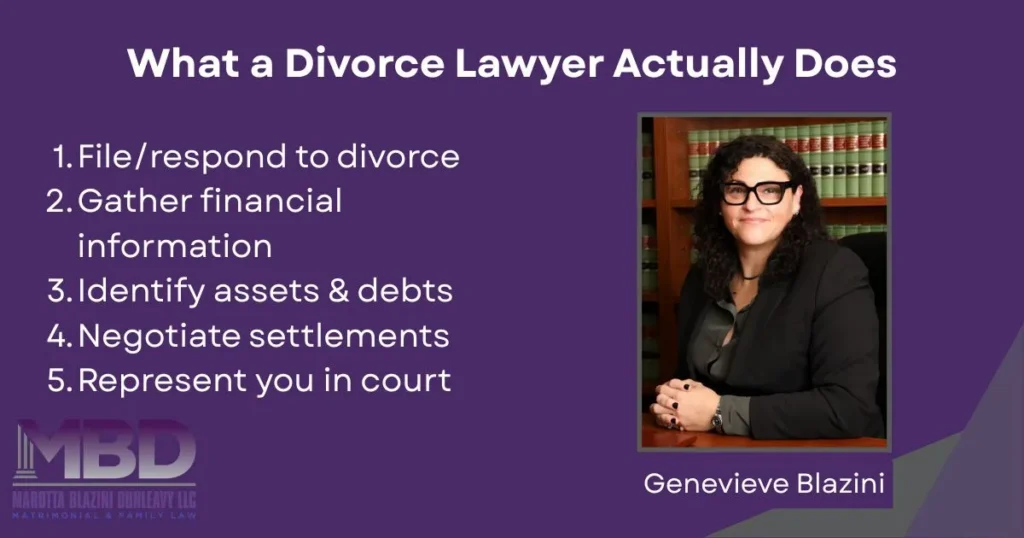
New Jersey follows equitable distribution principles when dividing marital property, meaning assets are divided fairly rather than equally. Courts consider factors such as marriage duration, each spouse’s economic circumstances, contributions to marital assets, and earning capacity when determining fair division. Marital property includes assets acquired during the marriage, while separate property, like inheritances or gifts to one spouse, remains with that individual. Our Paramus divorce lawyers guide clients when classification and valuation of assets become a point of contention, requiring financial documentation and professional appraisals.
New Jersey courts prioritize the best interests of children when making child custody decisions. Judges consider the relationship between each parent and child, the ability of each parent to provide a stable environment, and the child’s preferences, if age-appropriate.
There are two main custody categories: Legal custody involves decision-making authority for major issues such as education and healthcare, whereas physical custody determines where children live. Courts may award joint or sole custody, and parenting time schedules vary based on work schedules, distance between homes, and the children’s needs.
New Jersey uses specific guidelines to calculate child support obligations based on both parents’ incomes and the number of children. The calculation considers gross income from all sources, including wages, bonuses, commissions, and investment returns. Additional factors include the cost of health insurance for children, childcare expenses necessary for employment, and parenting time arrangements. Courts can deviate from guideline amounts in cases involving high-asset divorces, special needs children, or other circumstances that make standard calculations inappropriate.
Alimony, also called spousal support, compensates a financially disadvantaged spouse after divorce. New Jersey recognizes several types, including open durational alimony for long marriages, limited duration alimony for shorter marriages, rehabilitative alimony to help a spouse gain employment skills, and reimbursement alimony for supporting a spouse through education. Courts evaluate factors like marriage length, standard of living during marriage, age, and health of both parties, and each spouse’s earning capacity when determining whether to award support and in what amount.
Retirement accounts accumulated during marriage are subject to division as marital property. The portion earned during the marriage belongs to both spouses, whereas contributions made before marriage or after separation remain separate property. Qualified Domestic Relations Orders allow retirement accounts like 401(k)s and pensions to be divided without tax penalties. Valuing pensions requires actuarial calculations, particularly for defined benefit plans where future payments depend on years of service and salary history.
Prenuptial agreements remain valid unless a party proves specific defects in how the agreement was created or executed. Courts examine whether both parties had independent legal counsel, made full financial disclosures, and signed voluntarily without coercion. Agreements become unenforceable if they were unconscionable at the time of signing or if enforcement would leave one spouse destitute. Even with these protections, well-drafted prenuptial agreements executed properly typically withstand challenges and govern property division and alimony matters during divorce.
New Jersey law defines domestic violence broadly to include physical harm, harassment, stalking, and terroristic threats; allegations and proof of this violence significantly impact custody, parenting time, and restraining order proceedings. Courts take these allegations seriously when determining whether unsupervised contact with children is appropriate. Our Paramus divorce lawyers help clients navigate the Prevention of Domestic Violence Act, which provides immediate protection through temporary restraining orders, followed by hearings for final restraining orders.
Divorce mediation offers an alternative to traditional court proceedings where a neutral third party helps spouses reach agreements on disputed issues. This process allows greater control over outcomes, maintains privacy, and generally costs less than litigation. However, mediation only works when both parties negotiate in good faith and can compromise. Litigation becomes necessary when power imbalances exist, one party refuses to disclose financial information, or fundamental disagreements prevent settlement. Some cases benefit from a hybrid approach using mediation for certain issues while litigating others.
If you need legal advice for a potential or settled divorce, reach out to the Paramus divorce lawyers at Marotta Blazini Dunleavy LLC. Our legal team will review your circumstances and pursue resolutions that support fairness, stability, and long-term financial security. For a free consultation, contact us by using our online form or by calling us today at 201-368-7713. Located in Maywood, New Jersey, we proudly serve clients throughout the surrounding areas.
OUR PRACTICE AREAS
CONTACT OUR FIRM
To schedule a consultation with one of our attorneys, fill out the form below!